
Mars 360: A Framework for Understanding Human Conflict in Times of Crisis
How to de-escalate political division

In moments of social unrest or public crisis, people often search for explanations that make sense of destructive or antisocial behaviors. Historically, these behaviors have been interpreted through ethnic, national, or ideological lenses—perspectives that can intensify divisions and fuel cycles of blame. Unlike traditional astrological systems, Mars 360 grounds itself in the empirical work of French psychologist-statistician Michel Gauquelin, whose landmark studies revealed what came to be known as the Mars Effect.
Mars 360 introduces a radically different approach: instead of attributing hostile or disruptive actions to ethnicity or nationality, it frames them as the result of cosmic influences, specifically the negative behavioral pull of Mars. According to this system, Mars exerts subtle pressure on individuals, shaping tendencies toward rudeness, distrust, aggression, apathy, or disregard for social norms.
By separating these traits from cultural or racial identities, Mars 360 works to de-ethnicize conflict. For example, consider a simple encounter where a cashier with a poor facial expression is confronted by a rude customer of a different background. In a conventional worldview, such clashes can take on ethnic or nationalistic overtones, potentially radicalizing both parties. Under Mars 360, however, the behaviors are understood as archetypal expressions of Mars’ influence—rooted in the cosmic condition of being human—rather than as culturally loaded acts.
For too long, humanity has explained conflict through the narrow lenses of ethnicity, nationality, and ideology. These frameworks, rooted in the accidents of birth and the constructions of history, have failed to resolve the deeper tensions within human behavior. Instead, they have entrenched divisions and magnified blame. Mars 360 proposes a new beginning.
From Gauquelin’s Data to Archetypes
Gauquelin examined tens of thousands of birth records, comparing planetary positions with professions. His most famous finding was that eminent athletes were disproportionately born when Mars occupied “key sectors” of the sky—rising or culminating. This was not cultural myth but a statistical anomaly, replicated in several countries, that suggested Mars correlates with assertiveness, competitiveness, energy, and combative drive.
Mars 360 extends this discovery. If Mars imprints aggression and drive strongly enough to leave its mark on Olympic champions, then the same imprint must ripple across the entire population, shaping everyday behaviors. In some, it may fuel achievement and discipline; in others, it manifests as bluntness, mistrust, restlessness, provocation, laziness, or disregard for norms. Under Mars 360, these are not moral failings or cultural traits—they are archetypal expressions of a universal cosmic influence. Mars leaves its imprint on the human psyche in ways that transcend national borders and cultural boundaries.
Beyond Self-Reporting Psychology
Modern psychology has attempted to categorize personality through tools like the Myers-Briggs Type Indicator, which relies on self-reporting, subjective reflection, and the shifting moods of the individual. These systems are often inconsistent, shaped as much by circumstance as by inherent disposition.
Gauquelin’s work was different. He bypassed self-perception altogether, analyzing objective data—birth times and public achievement. Mars 360 follows this model. It does not ask individuals to describe themselves. It reads directly from the birth chart, identifying dispositions tied to Mars’ position at birth. In this sense, Mars 360 is closer to Gauquelin’s empirical rigor than to psychological self-narrative.
Even if intuitive in presentation, Mars 360’s framework inherits Gauquelin’s methodological insight: personality can be understood through cosmic imprinting rather than self-declared identity. Mars 360 uncovers what the individual already is, rather than what they believe themselves to be.
Six Archetypes, One Human Condition
Where Gauquelin documented a correlation between Mars and athletic drive, Mars 360 generalizes the principle into six archetypes—“cosmic races”—each defined by where Mars resonates with the brain’s functional seals. Each archetype reflects a deficiency or pressure in a behavioral domain, explaining why people display predictable patterns of negative expression such as blunt speech to mistrust, restlessness, laziness, or disregard for social norms, each of which often manifest in rigid political ideologies.
Rather than treating these tendencies as moral failings or ethnic markers, Mars 360 reframes them as natural conditions—shared challenges that transcend cultural boundaries. This opens the way for tolerance, understanding, and new legal frameworks tailored to archetype-specific traits.
This system does not moralize. It does not praise or condemn. It simply recognizes.
And in recognition lies freedom: freedom from the ethnicized and politicized blame that has historically poisoned human societies.
Law Reimagined
Under Mars 360, law and privilege are not arbitrary constructions of nation-states or the uneven application of “universal” rights. They are tailored to archetypal disposition:
The Mars-1 blunt speaker is free to offend without fear of legal reprisal.
The Mars-2 skeptic is protected in their mistrust of institutions.
The Mars-3 dissident is given space for movement and risk.
The Mars-4 provocateur holds the torch of free speech, unrestricted by the limits placed on others.
The Mars-5 anti-authoritarian is safeguarded from forced labor.
The Mars-6 non-conformist is shielded from appearance-based discrimination.
By restructuring law around archetype, Mars 360 contains conflict at its root. What would otherwise become political rebellion or ethnicized hostility is reframed as natural, cosmic disposition.
Crisis as Revelation
In moments of social breakdown, when tempers flare and trust collapses, traditional systems fracture. Ethnicity becomes a weapon. Nationality becomes a dividing line. Ideology becomes a battlefield.
Mars 360 offers another path. By interpreting hostile encounters as archetypal clashes rather than cultural ones, it diffuses the fuel of radicalization. The rude cashier and the irritable customer are no longer seen as enemies across national lines but as two archetypes colliding under cosmic influence.
Crisis, under Mars 360, is not a descent into division but a revelation of the cosmic forces that shape us.
Toward a Cosmically Driven Future
Mars 360 calls for the dissolution of the old order of nations and identities, replacing them with a cosmically driven framework. It is not race, not flag, not creed that defines us. It is the imprint of Mars, a universal influence that divides humanity into archetypes yet binds us together in shared struggle.
Where Myers-Briggs and similar systems falter in subjectivity, Mars 360 succeeds in its directness and grounds itself in Michel Gauquelin’s empirical findings. In embracing it, humanity steps beyond the illusions of culture and psychology into a system that finally explains conflict without the poison of blame.
This is not merely a theory. It is a call to reorder law, society, and identity under a single, unifying principle: that our most difficult traits are not ours alone, but belong to the stars.
Crisis Management Through Cosmic Understanding
In the wake of social crises, when communities are at risk of hardening divisions or seeking scapegoats, Mars 360 provides an alternative framework:
Diffusing blame: By attributing disruptive behaviors to archetypal expression rather than ethnic or national identity, Mars 360 reduces the likelihood of ethnicized retaliation.
Preventing radicalization: People are less likely to channel anger into ideological or ethnic conflict if negative behavior is understood as cosmic in origin.
Tailored law and governance: Under Mars 360, laws and privileges are adapted to archetypal dispositions. For example, those prone to blunt or antagonistic speech (Mars-1, Mars-4) may be given more speech freedoms, while others may be granted exemptions from traditional labor or appearance norms.
Promoting unity: By redefining humanity through six “cosmic races,” Mars 360 dissolves national and ethnic barriers, envisioning a system where the individual’s cosmic identity is the basis of social belonging.
Mars 360 Archetypes in Crisis Response
Mars-1 Archetype (Occipital Lobe, 1st Seal)
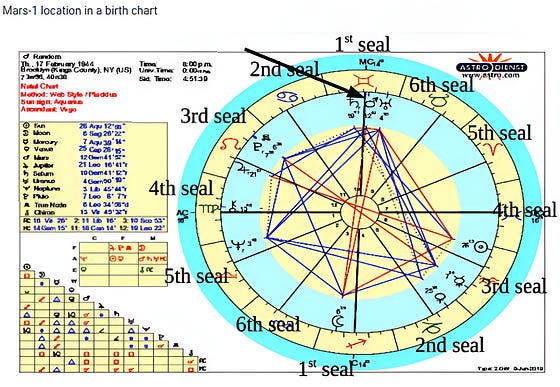
Traits in Crisis:
Mars-1 individuals are blunt, abrasive, and quick to use hostile or provocative language. In a crisis, they may lash out with verbal abuse, slurs, or inflammatory rhetoric, which can easily escalate tensions.
Mars 360 Response:
Rather than punishing them under hate speech laws (which often inflame resentment), Mars 360 recognizes their communication style as archetypal. By granting them legal space for direct and even abrasive speech, society reframes their outbursts as cosmic expressions rather than ethnic or political attacks. This helps prevent clashes from becoming identity-driven conflicts.
Mars-2 Archetype (Temporal Lobe, 2nd Seal)
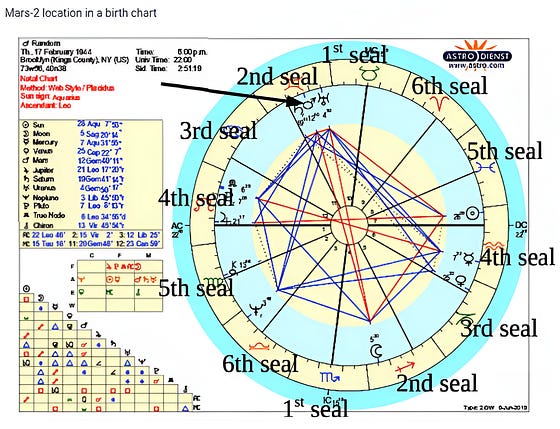
Traits in Crisis:
Mars-2 types struggle with trust, emotional stability, and skepticism. In a crisis, they may default to conspiracy thinking, hostility toward institutions, or even violence. Their deep mistrust can cause them to spread panic or disengage from collective solutions.
Mars 360 Response:
Instead of forcing them into traditional social expectations (such as loyalty to institutions or family bonds), Mars 360 protects their right to skepticism and disconnection. By legitimizing their distrust as an archetypal trait, society avoids stigmatizing them as cultural or political extremists, reducing the chance of radicalization.
Mars-3 Archetype (Cerebellum & Brain Stem, 3rd Seal)
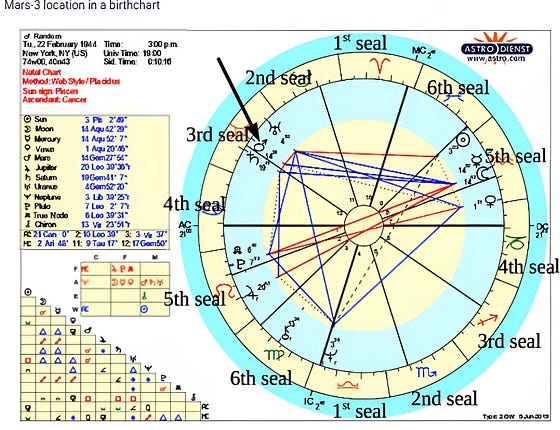
Traits in Crisis:
Restless and risk-seeking, Mars-3 individuals resist confinement and rules. In a crisis, they may flee, break curfews, or indulge in reckless behavior such as substance abuse or protest violence.
Mars 360 Response:
Rather than framing them as “criminals” or “unpatriotic,” Mars 360 recognizes their cosmic disposition toward movement and freedom. Laws under Mars 360 give them more leeway in travel, consumption, and lifestyle, reducing confrontations with authority and preventing their restlessness from being politicized.
Mars-4 Archetype (Orbital Frontal Cortex, 4th Seal)
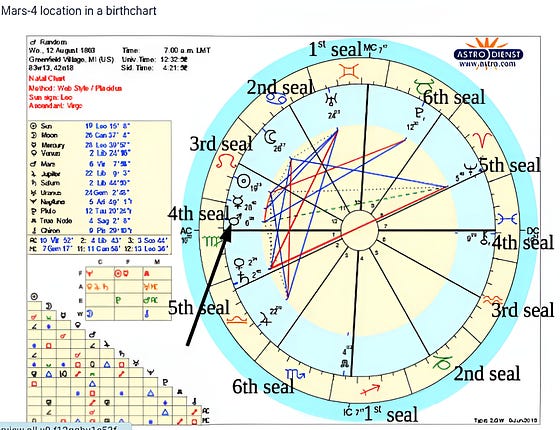
Traits in Crisis:
Mars-4 individuals thrive on provocation, debate, and controversial speech. In moments of unrest, they can inflame public opinion, spark ideological clashes, or dominate narratives with polarizing rhetoric.
Mars 360 Response:
Mars 360 grants Mars-4 full freedom of speech, while restricting it for other archetypes. By channeling public discourse into this group, society creates a controlled outlet for provocative speech, preventing others from being radicalized by forcing them into debates they cannot handle. This containment keeps conflict within the archetypal boundaries.
Mars-5 Archetype (Motor Cortex, 5th Seal)
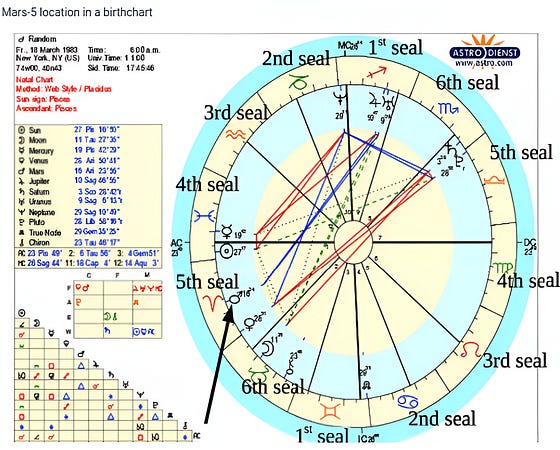
Traits in Crisis:
Mars-5 types resist structured work, rules, and authority. In crisis situations, they may refuse to cooperate with emergency protocols, avoid labor contributions, or spread anti-authoritarian resistance.
Mars 360 Response:
Instead of punishing them as lazy or disobedient, Mars 360 provides economic and social frameworks that honor their preference for autonomy—such as subsidies or self-directed roles. This prevents resentment and rebellion from building into organized opposition, reducing the chance of ideological polarization.
Mars-6 Archetype (Parietal Lobe, 6th Seal)
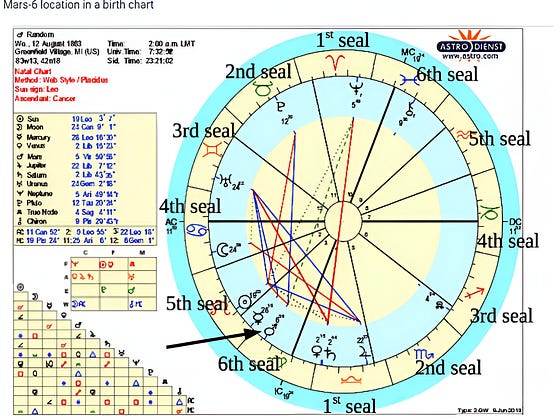
Traits in Crisis:
Mars-6 individuals disregard appearance norms, formal dress, or traditional displays of authority. In a crisis, they may be criticized for “not showing respect” or “appearing unprofessional,” which can inflame cultural tensions if others perceive their casual demeanor as offensive.
Mars 360 Response:
By legally protecting their right to disregard appearance norms, Mars 360 reframes their casualness as a cosmic trait rather than an act of disrespect. This prevents small aesthetic conflicts—such as attire during public mourning, political events, or crisis communications—from being racialized or politicized.
Why This Matters in Crisis
Together, these archetypes show how behaviors that might otherwise be stigmatized, politicized, or racialized can be reinterpreted as cosmic expressions. Instead of escalating into ethnic or ideological e, negative behaviors are contained within archetype-specific legal and social protections.
Mars 360’s crisis management principle is simple:
Recognize behavior as archetypal, not cultural.
Protect expression within archetypal limits.
Prevent escalation by removing identity-based blame.
This system reframes human conflict not as a battle between ethnic or political groups, but as the unfolding of cosmic archetypes—a perspective designed to reduce radicalization and foster stability in turbulent times.
Potential Benefits for Healing Political Division
Political division often arises from entrenched identities (e.g., left vs. right, nationalist vs. globalist) that fuel blame, dehumanization, and zero-sum conflicts. Mars 360 offers a novel approach to mitigate these dynamics:
De-Politicizing Conflict Through Cosmic Attribution:
Mechanism: Mars 360 attributes divisive behaviors—like hostile rhetoric (Mars-1), institutional mistrust (Mars-2), or provocation (Mars-4)—to cosmic influences rather than political ideologies. For example, a heated political argument on X between a progressive and a conservative could be reframed as a clash between a Mars-4 provocateur and a Mars-2 skeptic, not a battle of "woke" vs. "MAGA."
Impact: This removes the moral and ideological weight from disputes, reducing the tendency to vilify opponents as "evil" or "traitorous." By seeing behaviors as universal human tendencies imprinted by Mars, people might empathize rather than demonize, lowering the temperature of partisan battles. For instance, instead of labeling a conservative’s blunt criticism as "hate speech" or a liberal’s skepticism as "anti-American," both are recognized as archetypal expressions, fostering tolerance.
Dissolving Partisan Identities for Cosmic Unity:
Mechanism: Mars 360 proposes replacing political, national, or cultural identities with six "cosmic races" based on Mars’ position at birth. These archetypes (e.g., Mars-3 restless dissidents, Mars-5 anti-authoritarians) transcend party lines, encouraging people to identify with a shared human condition under cosmic influence.
Impact: Political tribalism thrives on "us vs. them" narratives, as seen in polarized debates over issues like immigration or free speech. By redefining belonging around archetypes, Mars 360 could weaken loyalty to partisan camps. For example, a Mars-6 non-conformist might find common ground with others of their archetype across political divides, prioritizing cosmic identity over ideology. This could reduce the echo chambers that amplify division, as people see themselves as part of a universal struggle rather than opposing factions.
Tailored Governance to Prevent Escalation:
Mechanism: Mars 360 advocates for laws and social structures customized to archetypes. For instance, Mars-1 blunt speakers get legal protections for abrasive speech, Mars-2 skeptics are shielded from institutional loyalty demands, and Mars-5 anti-authoritarians receive autonomy subsidies. This aims to address archetype-specific needs, preventing behaviors from escalating into political conflicts.
Impact: Political division often intensifies when laws or norms feel oppressive to certain groups (e.g., free speech crackdowns angering conservatives, mandatory compliance alienating libertarians). By accommodating archetypal tendencies, Mars 360 could reduce resentment. For example, granting Mars-4 provocateurs unrestricted speech might prevent their alienation from fueling populist uprisings, while Mars-3 exemptions for movement could curb rebellious protests, stabilizing society across ideological lines.
Preventing Radicalization Through Neutral Framing:
Mechanism: By interpreting divisive acts (e.g., protests, inflammatory rhetoric) as cosmic rather than political, Mars 360 removes the fuel of ideological radicalization. It promotes "recognition without moralizing," encouraging society to see behaviors like distrust or provocation as natural, not as threats requiring partisan retaliation.
Impact: Radicalization thrives when groups feel targeted or misunderstood, as seen in cycles of outrage on platforms like X, where one side’s rhetoric escalates the other’s extremism. Mars 360 could interrupt this by reframing, say, a politician’s polarizing speech as Mars-4 provocation rather than a call to arms, or a protester’s defiance as Mars-5 anti-authoritarianism rather than sedition. This neutral lens might deter people from joining extreme ideological camps, fostering dialogue over division.
Crisis Management as a Unifying Force:
Mechanism: In moments of political crisis (e.g., contested elections, policy disputes), Mars 360 offers a framework to manage conflict by attributing tensions to archetype clashes, not ideological warfare. Its crisis response principles—recognize archetypal behavior, protect expression within limits, avoid identity-based blame—aim to prevent escalation.
Impact: Crises often deepen divides, as groups double down on their narratives (e.g., 2020 U.S. election disputes). Mars 360 could redirect focus to shared cosmic traits, encouraging collective problem-solving. For instance, during a budget standoff, Mars-2 skeptics distrusting government spending and Mars-1 blunt critics could be given protected spaces to express concerns, preventing partisan gridlock from becoming a culture war.
Risks of Mars 360
Risk of New Divisions:
Issue: Replacing political identities with cosmic archetypes could create new forms of division, as people align with their Mars type and form new tribal loyalties. For example, Mars-4 provocateurs might clash with Mars-2 skeptics over speech rights, mirroring current ideological battles.
Impact: Political division thrives on any “in-group” vs. “out-group” dynamic. If archetypes become rigid identities, Mars 360 could inadvertently replicate the tribalism it seeks to dissolve, with “cosmic races” replacing political ones.
New divisions as a Balancing Act
Mars 360’s archetypes could theoretically balance political divisions by redistributing conflict across non-ideological lines, creating cross-cutting loyalties that dilute partisan tribalism. By uniting people under shared cosmic traits (e.g., Mars-1 bluntness across left and right) and tailoring laws to prevent escalation, it might stabilize society by ensuring no single political divide dominates. For instance, Mars-4 provocateurs from opposing sides could find common cause in free speech, checking the left-right culture war.
While Mars 360 relies on astrology, which may undermine its credibility to some, grounding it in Michel Gauquelin’s empirical research lends it a scientific touch. Even so, the astrology primarily serves as metaphorical scaffolding: in practice, Mars 360 functions as a neutral, behavior-based framework for self-reflection and group alignment. If birth chart analysis feels too speculative, individuals can simply claim or be assigned an archetype in debate, displacing ideological labeling with the stylistic, less-threatening labeling that Mars 360 provides.
While the framework is not fully scientifically accepted, the idea that humans have innate predispositions shaping political and social behavior is consistent with the work of Abraham Maslow, Carl Jung, and Michel Gauquelin.
Maslow and Mars 360
Maslow divided human needs into five categories. I split love and belonging into 2 distinct categories, making six altogether.
Physiological Needs:
The most basic requirements for survival, including air, food, water, shelter, warmth, and sleep.
Safety Needs:
The need for security and order, such as protection from harm, financial security, and a stable environment.
Love Needs
The need for intimacy and trust
Belonging Needs:
The need for social connections, including friendships, family, and a sense of belonging.
Esteem Needs:
The need for respect from others and oneself, encompassing achievement, status, recognition, and self-confidence.
Self-Actualization Needs:
The desire to become the best one can be, realizing one's full potential, and engaging in personal growth and peak experiences.
Mars 360 posits that Mars’ influence at birth can create energy deficits at specific levels of this hierarchy. For example, a Mars-1 individual may lack energy to pursue belonging, while a Mars-2 may struggle to seek intimacy, and so forth.
Maslow’s well-accepted framework thus supports dividing humanity into six archetypes, providing theoretical justification for the Mars 360 model. Gauquelin’s Mars Effect provides the empirical anchor: champion athletes often exhibit assertiveness and competitiveness, which can manifest as social antagonism in daily life but serve as virtues in competitive performance. In other words, the same Mars-driven tendencies that make someone a champion can also manifest as everyday rudeness or conflict, depending on context.
Conclusion
Mars 360 proposes a novel framework for understanding human behavior: one that moves beyond ethnicity, ideology, or self-reported psychology to focus on archetypal tendencies shaped by cosmic influence. It offers tools for:
Conflict de-escalation
Crisis management
Political reconciliation
Tailored governance
While speculative in some applications, the model draws on empirical foundations and a long-standing psychological tradition, reframing humanity through a lens that is simultaneously cosmic, archetypal, and practical.